Background
Nigeria, a nation of immense potential, faces complex challenges that hinder its development. With a population of over 220 million, it's Africa's largest economy, yet over 40% of its people live in poverty. Economic growth has not kept pace with population expansion, and per capita income has declined since 2010. Our mission is to confront these obstacles head-on.
We recognize the multifaceted nature of these issues:
-
Economic Instability:
The Nigerian economy is highly dependent on oil, leading to fiscal and debt vulnerabilities. Recent macro-fiscal reforms, while a step in the right direction, have not fully addressed the urgent need for domestic revenue mobilization and diversified growth.
-
Governance and Security:
Long-standing challenges with governance, transparency, and institutional trust dampen business confidence. Additionally, widespread insecurity, including insurgency and communal conflicts, has displaced millions and created instability.
-
Climate Vulnerability:
Nigeria is among the top 10 countries most susceptible to climate change, facing severe risks from floods, droughts, and extreme heat. Climate inaction could cost the nation up to 30% of its GDP by 2050.
Key Features
Addressing Nigeria's Water, Food, and Energy Security
Nigeria faces significant and interconnected challenges in its water, food, and energy sectors, all of which are made worse by climate change. Water scarcity and extreme weather events threaten the livelihoods of millions and undermine economic development.
Water Infrastructure and Dam Management
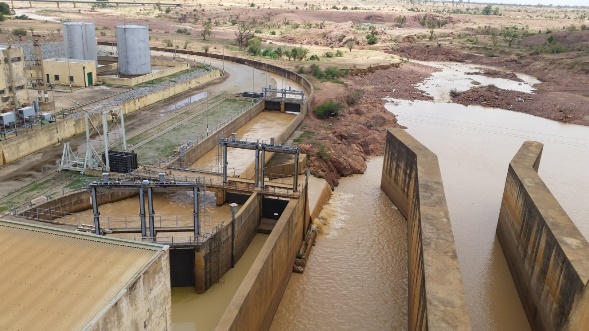
With over 400 dams, Nigeria has a vast water storage potential of 59 billion cubic meters. However, more than half of its large dams, built decades ago, require urgent rehabilitation. Institutions responsible for managing these dams—whether federal or state—lack the necessary budget and capacity for proper operation and maintenance. This neglect has led to a breakdown of infrastructure, limiting the dams’ potential to protect against extreme weather events. The devastating 2022 floods, which caused an estimated US$6.7 billion in damage, highlight the critical need to improve dam management.
Food Production and Irrigation
Agriculture is vital to Nigeria's economy, contributing over a quarter of its GDP and employing more than a third of the workforce. However, the sector is highly vulnerable to climate change due to its reliance on rain-fed farming. Despite having significant water resources, a decline in seasonal water availability has hampered crop production, putting 26.5 million Nigerians at risk of food insecurity in 2024. To address this, Nigeria aims to expand its irrigated area to 500,000 hectares by 2030. This requires improving existing irrigation systems and scaling up successful management models, such as the one pioneered by the World Bank-funded TRIMING Project, which empowered water user associations to manage irrigation canals.
Power Generation and Hydropower Potential
Access to electricity is a major hurdle, with 85 million Nigerians lacking power. Demand is growing rapidly, but the country faces an estimated 2,000 MW shortfall in its power capacity. Hydropower offers a promising solution. Nigeria has an estimated 14,120 MW of exploitable hydropower potential, but 85% remains undeveloped. Increasing hydropower's role in the energy mix would provide a stable, affordable, and clean power source, supporting economic growth and the country's energy transition.